
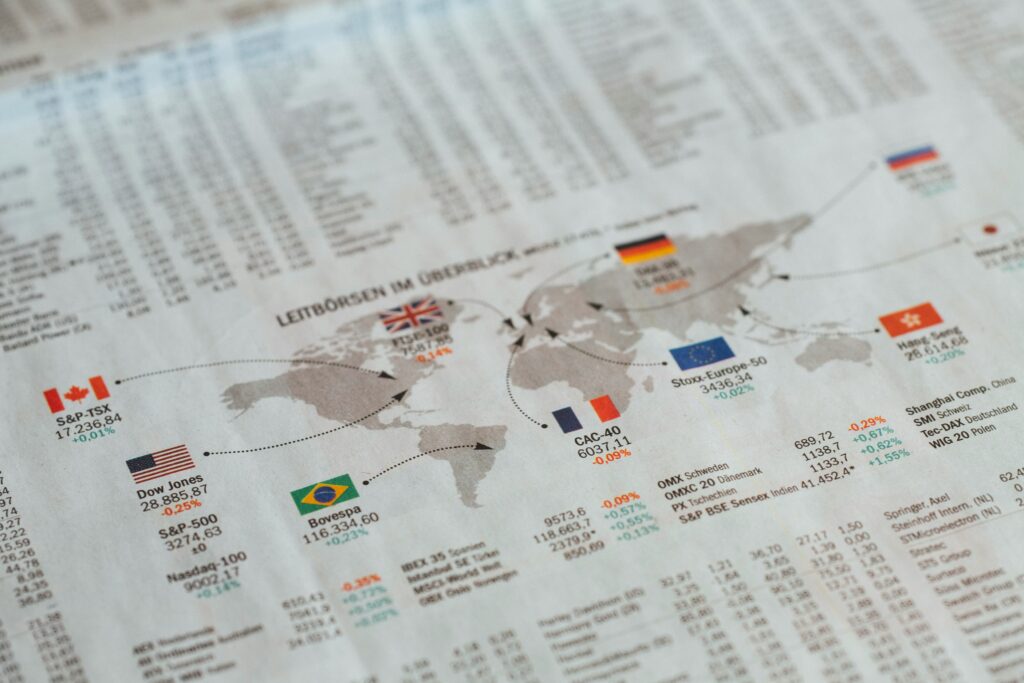
Macro Forces Reshaping the Market
After a rollercoaster few years, post recession recovery isn’t just a talking point it’s the ground we’re walking on. Most major economies have clawed back lost GDP, corporate earnings are stabilizing, and job markets remain resilient. But it’s not full steam ahead. Growth is uneven, and consumers are still adapting to higher baseline prices left in inflation’s wake.
Speaking of inflation, it’s finally cooling. The dramatic rate hikes are slowing down, and we’re seeing price growth return to manageable levels. That’s a mixed bag for investors. Equities are breathing easier with the pressure off, but with bond yields less aggressive, the easy gains from higher rates are fading. Commodities? That depends. Energy remains choppy, while materials and agriculture are slightly more predictable with supply chains healing.
Big moves from central banks are also reshaping the tempo. The Fed is in a hold steady mode, trying not to spook markets while keeping inflation in check. In Europe, the ECB is cautiously dovish, with some softening on the horizon to revive sluggish growth. Emerging markets are dancing to a different beat some are easing to boost activity, others still fighting inflation with tight policies. For traders, diversifying across these cycles is more important than ever.
Markets aren’t bracing for impact anymore but no one’s dropping their guard. The reset is in motion, and how governments and investors react in the coming quarters will shape the next chapter.
Sectors Leading the Charge
As we move deeper into 2026, several sectors are showing strong momentum while others offer stability amid broader market uncertainty. Let’s explore the industries making the biggest impact.
Green Energy and Clean Tech: A Continued Surge
The global shift to sustainable energy solutions remains one of the most significant investment narratives of the decade. With renewed government support, improved technology, and heightened corporate ESG commitments, clean energy is gaining serious traction.
On the rise: solar, wind, and hydrogen based solutions
Policy tailwinds: carbon credit markets, tax incentives, and climate agreements
Investor confidence: strong inflows into clean energy ETFs and infrastructure funds
While some volatility persists, the long term trends still point upward for green innovation and infrastructure.
AI and Automation: Leading the Tech Frontier
Artificial Intelligence and automation are not just buzzwords they’re driving real growth across sectors, outpacing legacy tech players in both ROI and revenue forecasts.
Key outperformers: AI cloud services, enterprise automation, and robotics
Applications expanding: logistics, finance, customer service, and manufacturing
Investment flows: venture capital and institutional interest shifting from traditional software to AI native platforms
Companies integrating AI into their core operations are seeing greater operational resilience and market adaptability.
Healthcare: Reliable Amid Shifting Politics
While not grabbing headlines, healthcare stocks are holding steady a classic defensive sector with a strong long term outlook. Regulatory uncertainty exists, but demand remains sustainably high.
Consistent demand: aging populations and post pandemic preventive care trends
Innovation hubs: biotech and personalized medicine attract strategic capital
Political factors: healthcare policy debates remain a wildcard, but core services continue unhindered
Overall, healthcare offers a stable foundation within a diversified portfolio, especially in politically dynamic periods.
Regional Growth Hotspots
As global supply chains realign and investment flows shift, new regional leaders are gaining attention on the world economic stage. Three regions in particular Southeast Asia, Sub Saharan Africa, and Latin America are showing signs of sustained momentum heading into 2026.
Southeast Asia: Manufacturing on the Rise
The diversification of global supply chains continues to benefit Southeast Asia, where countries like Vietnam, Indonesia, and Thailand are quickly becoming alternative hubs to China for manufacturing and assembly.
Rising foreign direct investment (FDI) in electronics, textiles, and machinery
Companies are relocating operations to mitigate geopolitical risk
Infrastructure upgrades and regional trade deals (like RCEP) accelerate growth
The region’s young, cost competitive workforce and improving logistics capacity contribute to a manufacturing boom that’s expected to continue well into 2026.
Sub Saharan Africa: A Resource Frontier
Natural resources remain a key asset for Sub Saharan economies, but the region is increasingly being recognized for its strategic role in global energy and minerals supply especially in clean energy sectors.
Critical minerals like cobalt, lithium, and rare earths are in growing demand
Renewable energy investment is picking up in select countries (e.g., Kenya, Namibia)
Trade partnerships with China, India, and the EU are expanding
As global companies seek to secure sustainable inputs, Sub Saharan Africa is moving from a peripheral role to a pivotal player.
Latin America: Reform Fueled Optimism
While economic challenges persist, several Latin American markets are showing cautious optimism on the back of meaningful financial and institutional reforms.
Central bank independence and inflation targeting gaining traction in countries like Brazil and Mexico
Tax and pension system overhauls attract international investors
Political transitions remain a wild card but are being navigated more smoothly
The region’s potential lies in its ability to maintain reform momentum while managing electoral cycles and external pressures. Investors are watching closely for signs of long term stability and growth.
These regional hotspots are not only responding to global shifts they’re helping to define them. As supply chains diversify and capital moves more freely, expect these regions to command more attention from investors, policymakers, and multinational firms alike.
What Volatility Says About 2026

Markets aren’t panicking but no one’s exactly at ease either. Investor sentiment going into 2026 is cautious but still participating. This isn’t 2008 style anxiety or 2021 level euphoria. It’s a foot on the brake, hand on the wheel kind of moment. Investors are watching headlines, moving strategically, and keeping cash slightly closer than usual.
The wild card that’s keeping nerves tight? Geopolitics. With conflicts flaring, trade talks stalling, and elections pending in major economies, pricing has become more reactive by the day. Equity swings tied to a tweet or policy leak are the new norm. If you’re trading, you’re probably watching more news than charts. If you’re long term, you’re bracing for bumps but not turning back.
Smart money knows this isn’t the time for autopilot. Active management, diversified positions, and a solid understanding of macro shifts are what carry weight now. For those looking to understand the underlying mechanics, check out the must read: Stock Market Volatility Explained: Causes and Solutions. It breaks down what’s really moving the needle and how to stay ahead of it.
Investment Strategies Worth Watching
In uncertain markets, capital doesn’t sprint it leans into stability. That’s why more investors in 2026 are swinging back to defensive plays. Utilities, dividend paying stalwarts, and gold are no longer just for the risk averse they’re proving themselves as dependable bunkers when volatility spikes and leadership rotates. These assets won’t dazzle with pace, but they won’t disappear overnight either. In a jittery global environment, that matters.
The old debate growth vs. value isn’t about picking a side anymore. It’s about balance. High volatility and inconsistent macro signals are forcing both retail and institutional portfolios to find middle ground. That means mixing blue chip value stocks for cash flow with select growth names that still show durable upside. Chasing moonshots alone is out. So is hugging only stable cash cows. The winners? Those who build a range that can pivot with the storm.
Another big change: average investors aren’t sticking to home turf anymore. Cross border investing is getting easier thanks to smarter broker platforms, fractional shares, and transparent currency conversion tools. Retail investors from New York to Nairobi now have access to global blue chips, emerging market ETFs, and more without jumping through hoops. That international exposure, once niche, is fast becoming a baseline for modern portfolios.
Tech, Policy, and Trade: Where the Arrows Point
Tech doesn’t move in a vacuum anymore. In 2026, cross border regulations are catching up to the global sprawl of digital platforms and supply chains. Governments are tightening data laws, placing stricter controls on where information flows and how tech is developed, especially in AI and semiconductor sectors. For multinational firms, that means reassessing partnerships and compliance strategies not just in China or the EU, but everywhere.
The old model of global trade, already fraying, continues to fragment. Regional trade agreements are thickening, often with overlapping standards and priorities. For supply chains, that means more checkpoints, more paperwork, more uncertainty. Companies are shifting toward localized production or multi point redundancy to stay resilient.
Add to that a volatile currency environment. With central banks diverging on rate policies, currencies are seesawing often unpredictably. Investors and multinationals alike are hedging more aggressively, not just to protect profits, but to avoid being blindsided by macro shifts.
Tech is still lucrative. Trade is still moving. But the map isn’t what it was. Even agile businesses are learning that playing global now means playing cautious, playing informed, and playing with backup plans.
Looking Ahead: Final Watchlist
As we head into the back half of 2026, the smartest investors aren’t watching headlines they’re watching data. A few key indicators will matter more than noise: labor market resilience, consumer spending trends, and manufacturing PMIs (purchasing managers’ indices). These numbers act like a real time pulse check on economic momentum or contraction. Ignore them at your own risk.
Global debt remains a pressure point. Governments have padded GDP during downturns with borrowed cash, but high debt tied to rising interest rates creates a tightrope act. Central banks in the U.S., EU, and Japan are treading carefully, balancing inflation control with avoiding recession relapse. If rates push higher this fall, expect ripple effects across housing, equities, and credit markets.
Then there’s politics a wildcard with teeth. Elections in the U.S., India, and a handful of European nations could shift fiscal policy, reshape regulatory frameworks, and throw new fuel on trade dynamics. Markets don’t love uncertainty, and investor behavior tends to get twitchy the closer these key votes get. Keep your eyes on the polls and your allocation nimble.
 Carlabeth Mitchellers is the kind of writer who genuinely cannot publish something without checking it twice. Maybe three times. They came to financial planning essentials through years of hands-on work rather than theory, which means the things they writes about — Financial Planning Essentials, Wealth Management Techniques, Market Trends and Analysis, among other areas — are things they has actually tested, questioned, and revised opinions on more than once.
That shows in the work. Carlabeth's pieces tend to go a level deeper than most. Not in a way that becomes unreadable, but in a way that makes you realize you'd been missing something important. They has a habit of finding the detail that everybody else glosses over and making it the center of the story — which sounds simple, but takes a rare combination of curiosity and patience to pull off consistently. The writing never feels rushed. It feels like someone who sat with the subject long enough to actually understand it.
Outside of specific topics, what Carlabeth cares about most is whether the reader walks away with something useful. Not impressed. Not entertained. Useful. That's a harder bar to clear than it sounds, and they clears it more often than not — which is why readers tend to remember Carlabeth's articles long after they've forgotten the headline.
Carlabeth Mitchellers is the kind of writer who genuinely cannot publish something without checking it twice. Maybe three times. They came to financial planning essentials through years of hands-on work rather than theory, which means the things they writes about — Financial Planning Essentials, Wealth Management Techniques, Market Trends and Analysis, among other areas — are things they has actually tested, questioned, and revised opinions on more than once.
That shows in the work. Carlabeth's pieces tend to go a level deeper than most. Not in a way that becomes unreadable, but in a way that makes you realize you'd been missing something important. They has a habit of finding the detail that everybody else glosses over and making it the center of the story — which sounds simple, but takes a rare combination of curiosity and patience to pull off consistently. The writing never feels rushed. It feels like someone who sat with the subject long enough to actually understand it.
Outside of specific topics, what Carlabeth cares about most is whether the reader walks away with something useful. Not impressed. Not entertained. Useful. That's a harder bar to clear than it sounds, and they clears it more often than not — which is why readers tend to remember Carlabeth's articles long after they've forgotten the headline.