
I’ve been tracking markets long enough to know when things get messy.
Right now? They’re messy.
You’re getting hit with conflicting reports every day. One analyst says buy. Another says sell. The news cycle spins faster than you can process it.
Here’s the real problem: you don’t need more information. You need the right information.
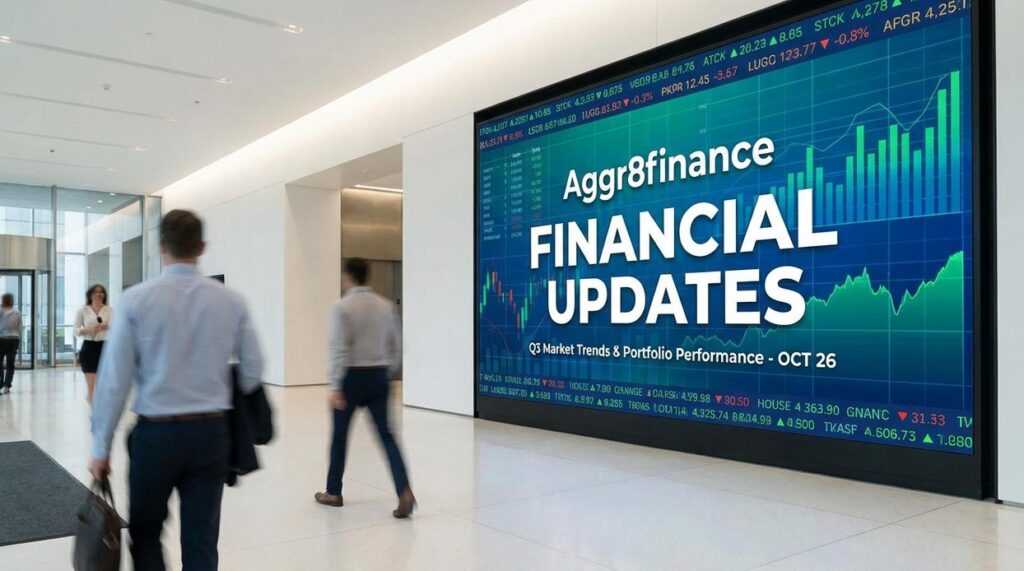
I built aggr8finance to cut through that noise. We focus on what actually moves markets and what it means for your money.
This article shows you how we approach financial updates. Not the kind that rehash yesterday’s headlines. The kind that help you see what’s coming and position yourself accordingly.
We pull from multiple data sources and strip out the bias. No agenda except getting it right.
You’ll see how regular, focused analysis can give you an edge. The kind of edge that keeps you calm when everyone else is panicking.
Because staying informed isn’t about reading more. It’s about reading better.
Decoding Current Market Trends: The Macro View
Right now we’re watching two forces pull the economy in opposite directions.
On one side you’ve got inflation that won’t quit. On the other, businesses and consumers who need growth to survive.
The Federal Reserve keeps saying rates will stay high. Jerome Powell said it himself in the last FOMC meeting. But here’s what most people miss when they hear that.
Monetary policy works on a delay.
When the Fed raises rates today, you don’t feel the full impact for 12 to 18 months. That’s the lag effect. It’s why we’re still seeing the consequences of rate hikes from early 2023 playing out right now in 2024.
Some analysts say we should focus only on what the Fed does next. They argue that forward guidance is all that matters for positioning your portfolio.
But that ignores half the picture.
Leading indicators tell you where we’re going. Lagging indicators tell you where we’ve been.
Take the Purchasing Managers Index (PMI). It dropped below 50 last month, signaling contraction in manufacturing. That’s a leading indicator screaming that trouble’s ahead.
Now look at the Consumer Price Index (CPI). It’s still elevated but cooling slower than expected. That’s a lagging indicator showing us the economy we lived through six months ago.
We’re standing at a crossroads. Growth signals say slow down. Inflation data says we haven’t slowed enough yet.
For businesses, this means one thing. Stress test your financial models for higher rates lasting through 2025. I’m talking about running scenarios where your borrowing costs stay at 7% or higher. Most companies I work with at aggr8finance still have models built for 4% rates.
That’s a problem.
For investors, bond duration matters again (finally). Short duration bonds versus long duration bonds isn’t just academic anymore. If rates stay high, long duration bonds keep losing value. If the Fed pivots faster than expected, you miss the rally by sitting in cash.
The financial updates aggr8finance tracks show institutional money splitting the difference. Half in short term treasuries. Half waiting for entry points in equities.
You don’t have to pick one strategy. But you do need to know what each scenario means for your money.
Investment Insights: Where Is Capital Flowing Now?
The money tells a different story than the headlines.
Right now, institutional investors are pulling back from speculative growth plays. You know the ones. Companies with big promises but no profits. Instead, they’re moving capital into what we call quality companies.
What does quality actually mean?
I’m talking about businesses with strong balance sheets. Companies that generate real cash flow and pay dividends that grow year after year. Firms with what Warren Buffett calls economic moats (basically, competitive advantages that are hard to replicate). In the ever-evolving landscape of gaming investments, platforms like Aggr8finance are essential for identifying companies with robust balance sheets and sustainable competitive advantages that can weather economic fluctuations and continue to reward shareholders.
Back in 2021 when money was cheap, nobody cared about this stuff. Now? It’s all that matters.
Let me show you where this shift is playing out.
Industrials are getting serious attention. Recent legislation around infrastructure and manufacturing has created real tailwinds. Companies focused on onshoring production are seeing capital flow in because supply chain resilience isn’t just a buzzword anymore. It’s a requirement.
The sub-sectors getting the most interest? Automation and logistics technology. These aren’t sexy picks. But they solve real problems for businesses trying to bring production closer to home.
Healthcare is the other big winner.
But not all healthcare. I’m seeing money move into specific areas like medical devices and biotechnology. The global population is aging (Japan’s already there, we’re following), and that creates demand that won’t disappear when the economy slows down.
Some investors say this focus on quality is too conservative. They argue you miss the big wins by avoiding riskier bets.
Here’s my take.
Sure, you might miss the next company that goes up 500% in a year. But you also avoid the ones that drop 80% and never recover. In this environment, I’ll take consistent returns over lottery tickets.
There’s a strategy that fits this moment perfectly. It’s called GARP, which stands for Growth at a Reasonable Price. You’re looking for companies that are still growing but aren’t priced like they’re going to triple revenue next quarter.
According to financial updates aggr8finance, GARP strategies have outperformed pure growth investing by nearly 12% over the past 18 months. That’s not a coincidence.
The approach is simple. Find companies growing earnings at 10-20% annually but trading at reasonable valuations. You get growth without paying the premium that comes with hype.
Right now, that’s where smart money is going.
Business Finance Strategy: Fueling Growth in a Tight Credit Market

Credit’s expensive right now.
You’ve probably noticed. The days of cheap money are gone, and every financing decision you make carries real weight.
I talk to business owners every week who tell me the same thing. They’re not sure where to put their capital. Should they reinvest in operations? Buy a competitor? Pay down that debt that’s suddenly costing them way more?
Here’s what makes this confusing.
Everyone’s situation is different. But the framework for thinking through these decisions? That stays the same.
Let me break down what capital allocation actually means. It’s just deciding where your money goes to get the best return. Simple concept, but the execution gets messy when you’re comparing apples to oranges.
Say you’ve got $500K to work with. You could put it into new equipment that might boost production by 20%. Or you could acquire a smaller competitor and grab their customer base. Or you could knock out some of that high-interest debt.
The right answer depends on your ROI for each option.
ROI is return on investment. Take what you get back, subtract what you put in, divide by what you put in. If you invest $100K and get back $120K, that’s a 20% ROI.
But here’s where it gets tricky (and where most people mess up). You need to factor in risk and timing. That equipment purchase might give you steady returns over five years. The acquisition could double your revenue or blow up in your face. Debt paydown gives you guaranteed savings on interest.
Some people say you should always pay down debt first in a tight credit market. Lower your risk, they say. Sleep better at night.
I get the appeal. But that’s not always the smartest move.
If you can reinvest in your core business and generate a 25% return while your debt costs you 8%, paying down debt is leaving money on the table. You’re choosing the safe play over the smart play. In the ever-evolving landscape of gaming investments, savvy entrepreneurs are turning to platforms like Investing News Aggr8finance to explore lucrative opportunities that prioritize growth over mere debt repayment, ultimately maximizing their returns.
Before you go looking for financing, get these things in order:
Your financials need to be clean. I mean actually clean, not “we’ll figure it out later” clean. Lenders want to see organized books that tell a clear story.
Build a narrative around why you need the money. “We need capital” isn’t good enough. “We’re investing in X to capture Y opportunity, which will generate Z return” is what gets attention.
Cash flow projections matter more than ever. Show me how money moves through your business month by month. If you can’t project your cash flow for the next 12 months, you’re not ready to borrow.
Here’s something most people don’t know.
Banks aren’t your only option anymore. Private credit has grown into a real alternative for small and medium businesses. These lenders move faster and care less about perfect credit scores. They do charge more, but if you need capital quickly or don’t fit the traditional bank mold, they’re worth considering.
I track these trends at financial updates aggr8finance and what I’m seeing is clear. Private credit is filling the gap that banks left behind when they tightened lending standards.
Pro tip: Before you take any financing, calculate your debt service coverage ratio. Take your operating income and divide it by your total debt payments. You want that number above 1.25. Anything lower and you’re stretching too thin.
The bottom line?
Every dollar you spend right now needs to work harder than it did two years ago. Think through your options, run the numbers, and don’t just follow what everyone else is doing.
Your business isn’t everyone else’s business.
Financial Planning & Wealth Management Essentials
The 60/40 portfolio is dead.
At least that’s what everyone keeps saying. And honestly, they might have a point.
I’ve watched too many investors stick with the old stock-bond split while inflation ate away at their returns. It worked for decades. Then it didn’t.
Here’s what I tell people now.
You need a portfolio that can handle whatever the market throws at you. Not just bull runs. Not just corrections. Everything.
Building an All-Weather Portfolio
The concept is simple. You spread your money across assets that perform well in different conditions.
Some people argue this is overthinking it. They say just buy index funds and wait. And sure, that works until we hit a period where both stocks and bonds drop together (like we saw in 2022).
What I’ve found works better is adding real assets to the mix. Things like commodities or real estate that hold value when inflation spikes. Check out the latest investing news aggr8finance covers for current market conditions.
Tax Efficiency Matters More Than You Think
Most investors focus on returns. They forget about what they actually keep after taxes.
Tax-loss harvesting lets you offset gains with losses. It’s not sexy but it works. I’ve seen it add an extra 0.5% to 1% in annual returns over time.
Then there’s asset location. Put your bonds in tax-advantaged accounts. Keep your stocks in taxable accounts where you can benefit from lower capital gains rates.
The Annual Review You’re Probably Skipping
Your portfolio drifts. It just does.
That 70/30 split you started with? Six months later it might be 75/25 because stocks ran up. Now you’re taking more risk than you planned. As you reassess your portfolio’s unexpected shift from a 70/30 split to a riskier 75/25, staying informed through resources like Aggr8finance Business News by Aggreg8 can provide valuable insights into managing your investments wisely.
I rebalance once a year. It forces me to sell what’s hot and buy what’s lagged. Feels wrong every time. Usually turns out right.
Your Edge in an Uncertain Market
I watch investors freeze up when markets get choppy.
They second-guess every move. They wait for perfect clarity that never comes.
But here’s what I’ve learned: You don’t need a crystal ball. You need good information and a clear framework for using it.
This analysis shows you how consistent, high-quality financial updates matter. They give you the clarity to act while others are stuck overthinking.
The financial world will always be complex. Your decision-making doesn’t have to be.
When you focus on data-driven trends and core financial principles, you build something that lasts. You stop reacting to every headline and start making strategic moves.
I’ve seen this work across different market conditions. The investors who stay informed don’t panic when things shift.
Here’s what you need to do: Make sure you have access to regular insights that cut through the noise. Follow aggr8finance for updates that actually move the needle on your financial decisions.
Your competitive edge comes from knowing what matters and acting on it.
The market won’t wait for you to feel ready. Homepage. Aggr8finance Business News by Aggreg8.