
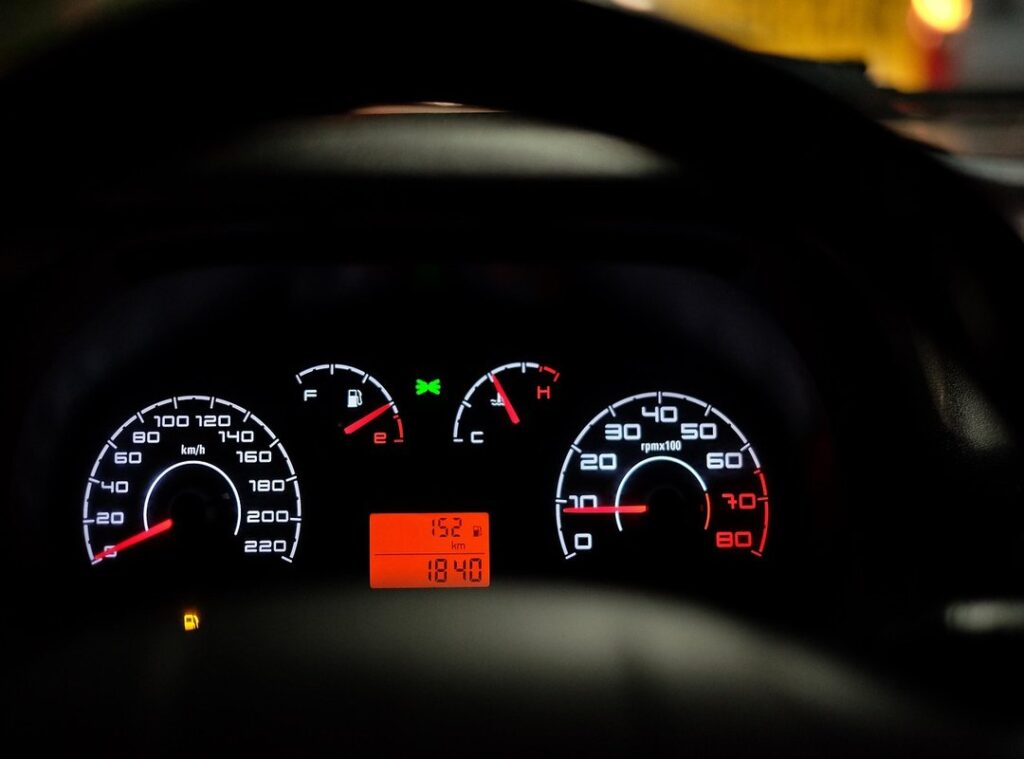
133 miles per hour (mph) is equal to approximately 214.04 kilometers per hour (kmh). Knowing this conversion can be really useful, especially if you’re dealing with international car specifications or traveling abroad. It helps you understand performance metrics from different countries.
This article will not only give you the answer but also show you the simple math behind it. I’ll provide a step-by-step method for converting any speed and offer a handy reference chart. The process is straightforward, and by the end, you’ll be able to do these calculations yourself.
The Core Formula: How MPH and KMH Relate
Have you ever wondered why 133 mph feels so much faster in kilometers? Let’s break it down.
One mile is significantly longer than one kilometer. The exact conversion factor is 1 mile = 1.60934 kilometers. This number is the key to all conversions.
To convert miles per hour (mph) to kilometers per hour (kmh), use this simple formula: Kilometers per Hour = Miles per Hour × 1.60934.
So, 133 mph × 1.60934 = 214.04222 kmh.
For practical use, we often round to two decimal places, making it 214.04 kmh.
To go the other way, from kmh to mph, you would divide by 1.60934. Simple, right?
Does that make sense, and or do you need more examples?
A Step-by-Step Walkthrough: Calculating 133 MPH to KMH
Converting miles per hour (mph) to kilometers per hour (kmh) can seem daunting, but it’s actually quite straightforward. Let’s break it down into simple steps.
Step 1: Start with your value in miles per hour. In this case, our starting number is 133.
Step 2: Identify the magic conversion number. The constant you need to remember is 1.60934.
Step 3: Perform the multiplication. Use a calculator to multiply your starting number by the conversion factor: 133 * 1.60934. Aggr8Finance
Step 4: Get your result and round appropriately. The calculator shows 214.04222. For most purposes, rounding to 214.04 kmh is perfect.
For a rough idea, just multiply the mph by 1.6. So, 133 times 1.6 gets you very close to the exact answer without a calculator. This mental math trick is handy when you don’t have a calculator nearby.
Understanding these steps will help you convert 133 mph to kmh or any other speed with ease.
Visualizing the Speed: What Does 133 MPH Feel Like?

Imagine driving at 133 mph. It’s a speed that’s hard to grasp unless you’ve experienced it.
Think about a high-performance sports car, like a Porsche or a Corvette. These cars can reach top speeds around 133 mph. But even then, they’re pushing their limits.
Now, compare that to the take-off speed of a small passenger aircraft. They often need around 133 mph (214 kmh) to get off the ground. That’s right, your car would be going as fast as a plane taking off.
On U.S. highways, the typical speed limit is between 65-75 mph. At 133 mph, you’re nearly doubling that. It’s a speed that feels like you’re flying, not driving.
This kind of speed is usually only seen on racetracks or closed courses. On a regular road, it’s not just extreme—it’s dangerous.
So, next time you hear 133 mph, remember it’s not just a number. It’s a whole different world of speed.
Quick Conversion Chart: Common Speeds from MPH to KMH
If you’re like me, you sometimes need a quick reference for speed conversions. Here’s a simple list to help you out:
- 25 mph ≈ 40 kmh (Residential streets)
- 55 mph ≈ 88 kmh (Older highway limits)
- 65 mph ≈ 105 kmh (Common highway speed)
- 75 mph ≈ 121 kmh (Interstate speed limits)
- 100 mph ≈ 161 kmh (A major performance benchmark)
- 133 mph ≈ 214 kmh (Supercar territory)
These are the speeds you’ll often see on Dayton, Ohio roads and highways. It’s handy to know these, especially if you’re traveling or just curious about how fast that supercar is really going.
Key Takeaways for Speed Conversions
To convert any mph value to kmh, simply multiply by 1.60934. 133 mph is 214.04 kmh, a speed reserved for high-performance vehicles. For quick mental math, remember to multiply by 1.6 for fast estimations on the go. Understanding this simple conversion makes it easy to interpret speeds from anywhere in the world, whether you’re looking at a car’s speedometer or watching an international auto race.
 Carlabeth Mitchellers is the kind of writer who genuinely cannot publish something without checking it twice. Maybe three times. They came to financial planning essentials through years of hands-on work rather than theory, which means the things they writes about — Financial Planning Essentials, Wealth Management Techniques, Market Trends and Analysis, among other areas — are things they has actually tested, questioned, and revised opinions on more than once.
That shows in the work. Carlabeth's pieces tend to go a level deeper than most. Not in a way that becomes unreadable, but in a way that makes you realize you'd been missing something important. They has a habit of finding the detail that everybody else glosses over and making it the center of the story — which sounds simple, but takes a rare combination of curiosity and patience to pull off consistently. The writing never feels rushed. It feels like someone who sat with the subject long enough to actually understand it.
Outside of specific topics, what Carlabeth cares about most is whether the reader walks away with something useful. Not impressed. Not entertained. Useful. That's a harder bar to clear than it sounds, and they clears it more often than not — which is why readers tend to remember Carlabeth's articles long after they've forgotten the headline.
Carlabeth Mitchellers is the kind of writer who genuinely cannot publish something without checking it twice. Maybe three times. They came to financial planning essentials through years of hands-on work rather than theory, which means the things they writes about — Financial Planning Essentials, Wealth Management Techniques, Market Trends and Analysis, among other areas — are things they has actually tested, questioned, and revised opinions on more than once.
That shows in the work. Carlabeth's pieces tend to go a level deeper than most. Not in a way that becomes unreadable, but in a way that makes you realize you'd been missing something important. They has a habit of finding the detail that everybody else glosses over and making it the center of the story — which sounds simple, but takes a rare combination of curiosity and patience to pull off consistently. The writing never feels rushed. It feels like someone who sat with the subject long enough to actually understand it.
Outside of specific topics, what Carlabeth cares about most is whether the reader walks away with something useful. Not impressed. Not entertained. Useful. That's a harder bar to clear than it sounds, and they clears it more often than not — which is why readers tend to remember Carlabeth's articles long after they've forgotten the headline.