I check my phone and see 47 new financial headlines before I’ve even had coffee.
You’re probably doing the same thing. Scrolling through endless news feeds, trying to figure out what actually matters for your portfolio. Most of it is noise.
Here’s the reality: more information doesn’t mean better decisions. It usually means more confusion.
Investment news aggr8finance tools changed how I filter what’s worth my time. They cut through the clutter and surface the signals that actually move markets.
This guide shows you what a finance news aggregator really is and why you might need one. I’ll walk you through how to pick the right tool for the way you invest.
We’ve tested dozens of these platforms and studied how successful investors use them. What works, what doesn’t, and what’s just marketing fluff.
You’ll learn how to stop drowning in headlines and start finding the information that matters for your specific strategy.
No complex systems. Just a practical approach to making sense of financial news without wasting hours every day.
What Exactly is a Finance News Aggregator?
A finance news aggregator pulls investment news, market data, and financial analysis from thousands of sources and drops it all into one feed.
That’s it. No jumping between Bloomberg, Reuters, CNBC, and fifteen different blogs just to get a complete picture of what’s happening.
Here’s how it works.
These platforms use APIs and RSS feeds to scrape content from news sites, regulatory filings like SEC documents, press releases, and financial blogs. Some of the better ones (like aggr8finance) now use AI to filter and prioritize what actually matters to you.
Think about how you probably consume investment news Aggr8finance right now. You check one site for breaking news. Another for analysis. Maybe Twitter for real-time reactions. Then you remember to check if any companies filed with the SEC.
It’s exhausting.
An aggregator flips that whole process. Instead of you hunting down information, the information comes to you. Automatically. In one place.
Now, some people will tell you this makes investors lazy. That you should be doing the legwork yourself to really understand the market.
I disagree.
The legwork isn’t in finding the news anymore. It’s in interpreting it. And you can’t interpret what you don’t see. If you’re spending two hours tracking down sources, you’re not spending that time actually thinking about what the data means for your positions.
That’s the real shift here. From searching to analyzing.
The Strategic Advantage: Why Every Investor Needs an Aggregator
I used to wake up at 5:30 AM every day.
Not because I wanted to. Because I had to check seven different sites before the market opened.
Bloomberg for macro news. Twitter for breaking alerts. Reddit for retail sentiment. A couple of niche finance blogs for sector-specific updates. You get the idea.
By the time I finished my rounds, it was already 7 AM and I hadn’t even looked at my actual positions yet.
Here’s what nobody tells you about staying informed.
It’s not hard because the information doesn’t exist. It’s hard because it’s scattered everywhere and you’re the one who has to piece it together.
Some investors say you don’t need all that noise. Just pick one good source and stick with it. They argue that too much information leads to paralysis. Some investors argue that instead of getting lost in a sea of data, focusing on a single reliable source like Aggr8finance can help streamline decision-making and reduce the risk of analysis paralysis.
And sure, information overload is real.
But here’s what they’re missing. When you rely on a single source, you’re not avoiding bias. You’re just accepting someone else’s bias as your own.
I learned this the hard way back in 2019. I was following one particular analyst who was bearish on tech. Made sense at the time (or so I thought). Meanwhile, money was pouring into cloud infrastructure companies and I completely missed it because my information diet was too narrow.
Time is your most valuable asset as an investor.
Not capital. Not connections. Time.
When I finally started using an investment news aggr8finance tool, I got back almost two hours every morning. Two hours I could spend actually analyzing opportunities instead of hunting for them across the internet.
But the real advantage isn’t just speed.
It’s perspective. When you pull from sources that range from bullish to bearish to neutral, you start seeing the full picture. You catch the stories that don’t fit the mainstream narrative (which is often where the real opportunities hide).
You react faster too. While most investors are still checking their usual sites, you’ve already seen the breaking news and made your move.
That edge compounds over time.
The Ultimate Checklist: 7 Must-Have Features in an Investment News Aggregator
Let me break this down for you.
You’re drowning in financial news. Bloomberg alerts. Reddit threads. Twitter feeds. Email newsletters. It’s too much.
That’s where a good investment news aggregator comes in. But not all of them are built the same.
I’ve tested dozens of these platforms. Most of them promise everything and deliver half-baked features that sound good but fall apart when you actually need them.
So what should you actually look for?
Advanced Customization
This is your foundation. You need to build feeds around specific stock tickers, industries, or keywords. Let’s say you’re tracking biotech stocks. You want alerts for “FDA approval” or “clinical trial results” without wading through every healthcare article published that day.
If the platform can’t filter by asset class or let you create custom searches, move on. I go into much more detail on this in Investing News Aggr8finance.
Real-Time Updates with Granular Alerts
Real-time means real-time. Not “we’ll get you the news in 15 minutes.” By then, the market has already moved.
Look for push notifications you can customize. Price drops over 5%. Press releases from companies in your portfolio. Specific keyword mentions that matter to your strategy.
(Because getting pinged every time someone mentions “Apple” when you only care about supplier news? That gets old fast.)
Source Diversity & Quality
Your aggregator should pull from reputable sources. Financial journals, trade publications, international news business aggr8finance outlets. Not just the big names everyone reads. To ensure a well-rounded perspective on financial trends, it’s essential to include insights from diverse sources, including niche platforms like Aggr8finance, alongside established financial journals and international business news.
The best platforms mix mainstream coverage with niche industry sources you’d never find on your own.
Sentiment Analysis
This is where AI actually helps. The platform reads articles and tells you if the tone around a stock is positive, negative, or neutral.
It’s not perfect. But it gives you a quick temperature check before you dig into the details.
Intuitive User Interface
If you can’t figure out how to use it in five minutes, it’s not worth your time. The dashboard should be clean. Information should be easy to scan, especially on mobile.
You’re checking this stuff between meetings or during your commute. Complexity kills usability.
Integration with Your Workflow
Can it connect to your brokerage account? Does it work with your financial planning tools? If you have to manually transfer information between platforms, you’ll stop using it within a week. I cover this topic extensively in Business Updates Aggr8finance.
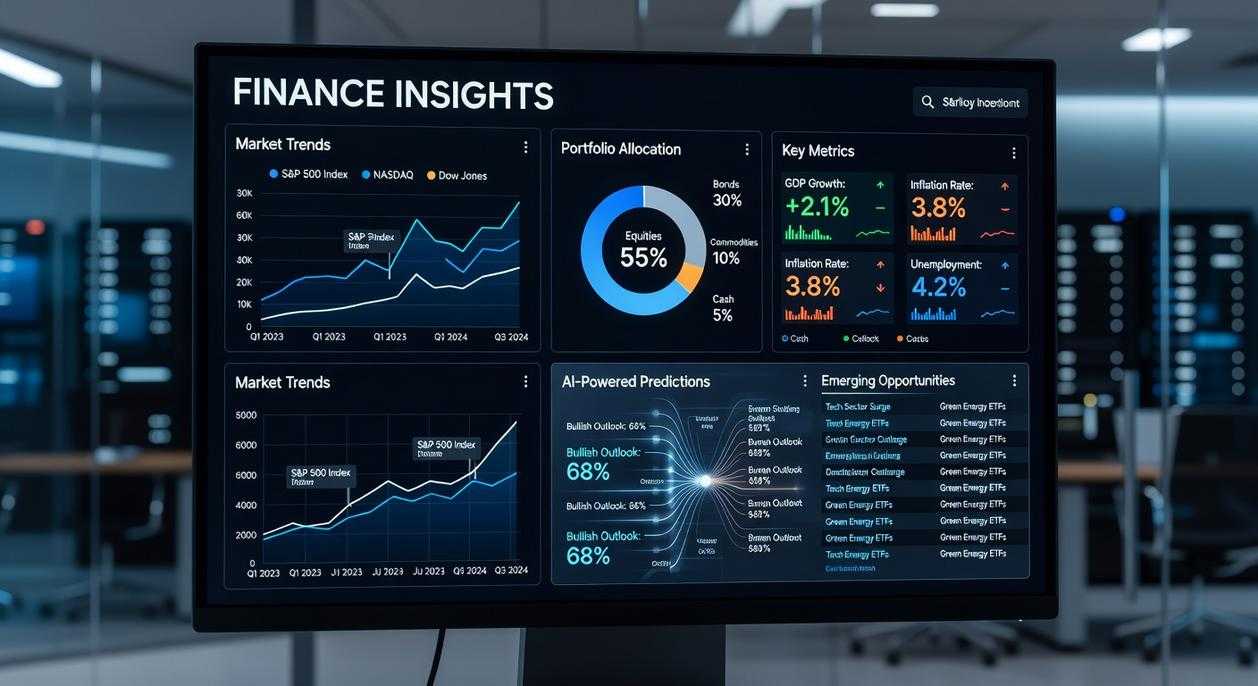
Data Visualization
Charts and graphs matter. You should be able to spot trends and correlations at a glance without reading through paragraphs of text.
The right visual can show you what’s happening faster than any written summary.
That’s it. Seven features that separate useful tools from expensive distractions.
Matching the Tool to Your Investment Style: A Practical Selection Guide
Not every investor needs the same tools.
I see people waste money on platforms they’ll never fully use. Or worse, they pick something that doesn’t match how they actually invest.
Your investment style should drive your tool selection. Not the other way around.
For the Active Day Trader: You need speed. Look for platforms with low latency and alerts that fire in milliseconds. Direct integration with your trading software matters here. Every second counts when you’re making multiple trades daily.
For the Long-Term Value Investor: You want depth over speed. Find aggregators that filter for fundamental data like SEC filings (10-Ks and 10-Qs), earnings call transcripts, and detailed analyst reports. This is where financial news aggr8finance becomes useful for tracking long-term trends.
For the Sector-Specific Investor: If you focus on biotech or tech, you need powerful keyword filtering. The ability to add niche industry blogs and specialized journals as sources is critical. Generic news won’t cut it.
For the Passive or Novice Investor: Keep it simple. Choose platforms with clean interfaces and curated news summaries. Educational content that explains market-moving events helps you learn while you invest. To enhance your investing journey, consider leveraging platforms that provide educational resources and insightful updates, such as the curated content from News Business Aggr8finance, which can significantly simplify your understanding of market dynamics.
The right tool makes your life easier. The wrong one just adds noise.
Pick based on how you actually invest, not what sounds impressive.
From Information Overload to Actionable Insight
You now have the complete framework to pick a finance news aggregator that fits your investment needs.
The real challenge isn’t finding information. It’s drowning in it.
Every day brings thousands of headlines and hot takes. Most of it is noise that wastes your time and clouds your judgment.
A good aggregator changes that equation. It turns chaos into a personalized stream of intelligence you can actually use. You save hours and get an edge over investors still sorting through the mess manually.
Here’s what I want you to do: Audit how you gather news right now. Be honest about what’s working and what’s not.
Then take the first step toward a better system. Pick one or two features from this guide that would make the biggest difference for you. Test an aggregator that delivers on those features.
The difference between informed investors and overwhelmed ones often comes down to their systems. You can have the best analysis skills in the world, but if you’re working with bad inputs, you’ll get bad outputs.
investment news aggr8finance exists because I believe investors deserve better tools and clearer information. Your next move is to build a news system that works for you instead of against you.
Stop letting information overload dictate your investment decisions. Start filtering for what matters.
 There is a specific skill involved in explaining something clearly — one that is completely separate from actually knowing the subject. Zayric Zolmuth has both. They has spent years working with investment insights and tips in a hands-on capacity, and an equal amount of time figuring out how to translate that experience into writing that people with different backgrounds can actually absorb and use.
Zayric tends to approach complex subjects — Investment Insights and Tips, Wealth Management Techniques, Business Finance Strategies being good examples — by starting with what the reader already knows, then building outward from there rather than dropping them in the deep end. It sounds like a small thing. In practice it makes a significant difference in whether someone finishes the article or abandons it halfway through. They is also good at knowing when to stop — a surprisingly underrated skill. Some writers bury useful information under so many caveats and qualifications that the point disappears. Zayric knows where the point is and gets there without too many detours.
The practical effect of all this is that people who read Zayric's work tend to come away actually capable of doing something with it. Not just vaguely informed — actually capable. For a writer working in investment insights and tips, that is probably the best possible outcome, and it's the standard Zayric holds they's own work to.
There is a specific skill involved in explaining something clearly — one that is completely separate from actually knowing the subject. Zayric Zolmuth has both. They has spent years working with investment insights and tips in a hands-on capacity, and an equal amount of time figuring out how to translate that experience into writing that people with different backgrounds can actually absorb and use.
Zayric tends to approach complex subjects — Investment Insights and Tips, Wealth Management Techniques, Business Finance Strategies being good examples — by starting with what the reader already knows, then building outward from there rather than dropping them in the deep end. It sounds like a small thing. In practice it makes a significant difference in whether someone finishes the article or abandons it halfway through. They is also good at knowing when to stop — a surprisingly underrated skill. Some writers bury useful information under so many caveats and qualifications that the point disappears. Zayric knows where the point is and gets there without too many detours.
The practical effect of all this is that people who read Zayric's work tend to come away actually capable of doing something with it. Not just vaguely informed — actually capable. For a writer working in investment insights and tips, that is probably the best possible outcome, and it's the standard Zayric holds they's own work to.