

I don’t have time to read 50 different financial news sources every week.
You probably don’t either.
That’s why I built AGGR8 Finance Economy News from Aggreg8. It filters thousands of data points down to what actually matters for your money.
The financial news cycle is designed to keep you scrolling. Most of it won’t affect your portfolio or your business decisions. But buried in all that noise are the signals that do matter.
I created a system that separates the two.
Every week, I pull together the most important finance and economy developments. Not the loudest stories. The ones that will actually impact how you think about your investments and business strategy.
This isn’t commentary on every headline. It’s the essential briefing you need to understand where markets are heading and why.
You’re here because you want clarity without spending hours hunting for it. That’s exactly what this delivers.
No fluff. No filler. Just the key takeaways that help you make better decisions with your money.
The Macro-Economic Landscape: Inflation, Interest Rates, and Growth
I remember sitting in my Dayton office last month when the CPI numbers dropped.
My phone lit up with alerts. Inflation came in at 2.9% year over year. Cooler than the 3.1% most analysts expected. But here’s what caught my attention.
Core inflation (the number that strips out food and energy) held steady at 3.2%.
That tells me something specific. Price pressures aren’t going away as fast as the headlines suggest.
The Fed’s playing a careful game right now.
At their last meeting, Powell kept his cards close. He said they’re “not in a rush” to cut rates further. Translation? They want to see more proof that inflation is actually dead before they make another move.
Some people think the Fed should cut rates aggressively to support growth. They point to slowing business investment and argue we’re risking a recession if we wait too long.
But I see it differently.
The employment data backs up the Fed’s caution. We added 143,000 jobs last month. Unemployment sits at 4.1%. Not spectacular, but not terrible either (especially when you consider we’re coming off historic lows).
GDP growth? We’re tracking around 2.3% for the quarter.
Here’s what this means when you put it together.
We’re in what I call a “wait and see” economy. Growth is steady but not exciting. Jobs are holding up. Inflation is cooling but still above the Fed’s 2% target.
The Fed won’t cut rates just because markets want them to. They need core inflation closer to 2% first. Based on the latest aggr8finance economy news, that probably means rates stay higher for longer than most investors expect.
For your portfolio, this matters.
Higher rates mean cash and short-term bonds still pay decent returns. Growth stocks face headwinds. Companies with strong cash flow and reasonable valuations look more attractive than they have in years.
I’m watching the next employment report closely. If we see weakness there while inflation stays stubborn, we might be heading toward the stagflation scenario nobody wants to talk about.
Market Performance Deep Dive: Equities, Bonds, and Commodities
The markets told a mixed story this week.
If you’re trying to figure out where to put your money right now, you need to understand what just happened across equities, bonds, and commodities. Because these three asset classes are sending different signals about what’s coming next. As the markets react to recent shifts across equities, bonds, and commodities, utilizing tools like Aggr8finance can help you navigate these complex signals to make informed investment decisions.
Let me break down what matters.
Equity Market Movers
The S&P 500 pulled back slightly after its recent run. Tech stocks led the decline, with the Nasdaq taking the biggest hit. The Dow Jones held up better thanks to strength in financials and industrials.
Here’s what you get from watching these moves: EARLY WARNING SIGNALS about sector rotation. When money flows out of growth stocks and into value plays, that tells you something about investor confidence.
The best performers? Energy and materials kept climbing. Healthcare stayed flat. The worst? Consumer discretionary got hammered as spending data came in weak.
Some analysts say sector performance doesn’t matter if you’re a long-term investor. They argue you should just buy index funds and forget about it.
But that ignores reality. Knowing which sectors are moving helps you rebalance before major shifts happen (not after you’ve already lost money).
The Bond Market’s Signal
Treasury yields moved in opposite directions this week. The 2-year yield ticked up while the 10-year dropped slightly.
What does that mean for you? The yield curve is flattening again. When short-term rates rise faster than long-term rates, it usually signals that bond investors expect slower growth ahead.
According to recent aggr8finance economy news, this pattern has preceded economic slowdowns before. Not always. But often enough that you should pay attention.
The 10-year Treasury sitting below certain thresholds tells me institutional money is getting cautious. They’re buying longer-dated bonds as a hedge.
Commodity Watch
Oil prices jumped on supply concerns. OPEC production cuts are tighter than expected, and geopolitical tensions in the Middle East aren’t helping.
Gold climbed too. When both oil and gold rise together, that’s usually a risk-off signal. Investors are buying safe havens.
Copper stayed relatively flat. That’s interesting because copper usually tracks economic growth expectations. A flat copper price while gold rises? That’s telling you the market isn’t sure what comes next.
Here’s what this means for your portfolio:
• Rising oil prices eat into consumer spending
• Gold strength suggests fear is building
• Flat copper means growth expectations are stalling
Investment Insight
Right now we’re in a weird middle ground. Not quite risk-on, not fully risk-off.
You can see it in the data. Defensive sectors are outperforming but haven’t completely taken over. Bond yields are mixed. Commodities are split between safe havens and growth plays.
What should you do? I’m watching for a clearer signal before making big moves. But I am trimming some high-beta positions and adding to sectors that perform well in slower growth environments.
The market is basically saying “we’re not sure yet.” And when the market isn’t sure, you shouldn’t pretend to be either.
Sector Spotlight: Key Trends in Technology and Consumer Goods
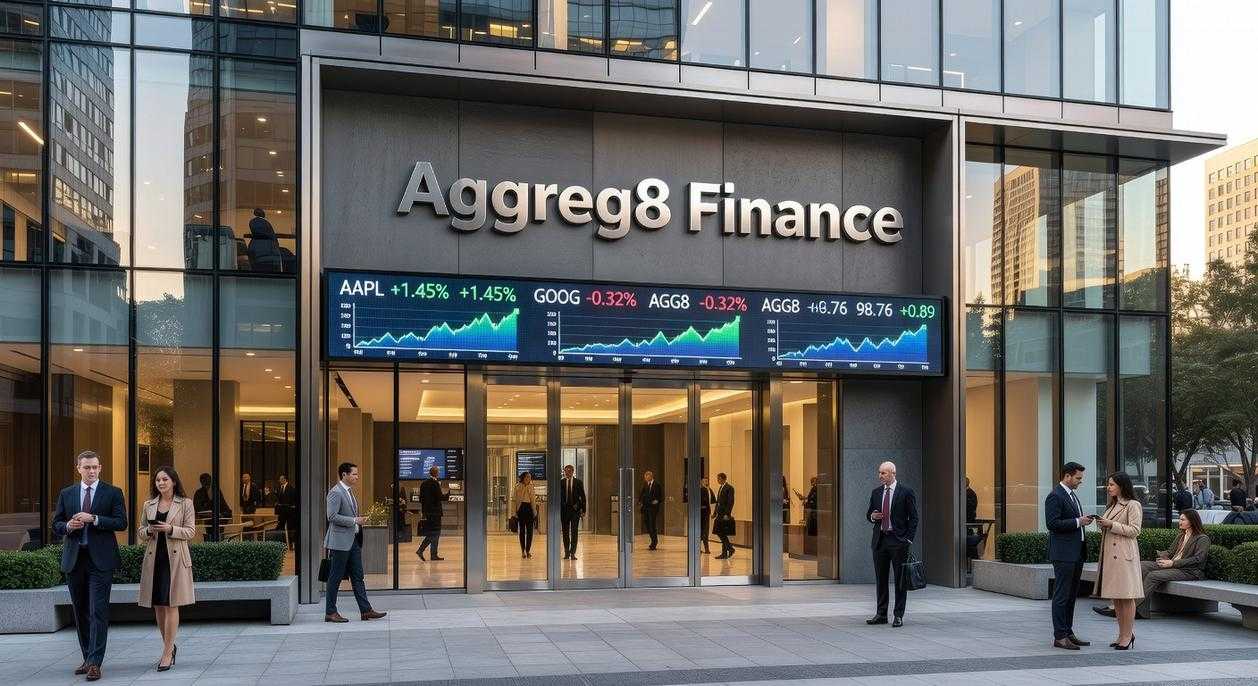
Tech spending is splitting in two directions right now. For the full picture, I lay it all out in Aggr8finance Business News by Aggreg8.
On one side, you’ve got AI infrastructure eating up billions. Companies are throwing money at data centers and computing power like there’s no tomorrow. Nvidia reported Q4 2024 revenue of $22.1 billion, up 265% year over year (source: Nvidia earnings report). As the gaming industry navigates the explosive growth of AI infrastructure, the latest insights from Business News Aggr8finance reveal how companies are investing unprecedented amounts in data centers to keep pace with the skyrocketing demand for processing power.
That’s not a typo.
But here’s what most people miss. Enterprise software spending is slowing down. CFOs are cutting SaaS subscriptions and asking harder questions about ROI. The easy money era is over for tech companies that can’t prove their value.
Some investors say this means you should dump all your tech holdings. They look at rising interest rates and tighter budgets and assume the whole sector is toast.
I disagree.
The consumer side tells a different story. Retail sales grew 0.4% in January 2025 (source: U.S. Census Bureau). Not explosive, but steady. People are still spending, just more carefully.
Target and Walmart both beat earnings expectations last quarter. But luxury brands? They’re struggling. The consumer isn’t weak. They’re just pickier about where their money goes.
For wealth management, this creates a clear picture. You want exposure to tech companies solving real problems, not just riding hype. AI infrastructure plays still look strong. Consumer discretionary needs more nuance now.
I’m watching financial news aggr8finance closely for updates on consumer sentiment shifts. The data changes fast.
The move here isn’t to go all in or all out on either sector. It’s about being selective and understanding which companies within these sectors actually have pricing power and real demand.
Actionable Business & Financial Planning Essentials
For Business Owners
Right now, I’m seeing a lot of owners asking the same question: should we push forward or pull back?
Based on what the business news Aggr8finance data is showing, the answer isn’t one or the other. It’s selective expansion.
Here’s what I mean. Don’t freeze your growth plans completely. But don’t throw money at every opportunity either.
Focus on one thing: improving cash conversion cycles. Get paid faster. Extend payables where you can (without damaging relationships). Cut inventory that sits too long.
This keeps you flexible. You’re not burning capital on big bets, but you’re not sitting still either.
For Personal Investors
The current market environment demands you look at your portfolio differently.
Volatility isn’t going away. That means your financial planning needs to account for bigger swings than you might be used to.
Rebalancing matters more now. If stocks have run up in your portfolio, you’re probably overweight. That feels great until it doesn’t.
Take some off the table. Move it into bonds or cash equivalents. Not because stocks are going to crash, but because you want to be ready when they do pull back.
Expert Tip for This Week
Review your bond allocation this week.
If you haven’t looked at it in six months, you’re probably not positioned right. Interest rates have moved. Your duration exposure might be off. In light of the recent shifts in interest rates and the potential misalignment of your duration exposure, it’s essential to stay informed, making resources like Financial News Aggr8finance invaluable for keeping your financial strategy on track.
Spend 20 minutes. Check your bond funds. Make sure you’re not taking more interest rate risk than you think.
Your Strategic Outlook for the Week Ahead
You came here to cut through the noise and get the market picture fast.
I built this briefing to do exactly that. No endless scrolling through headlines or piecing together fragments from different sources.
You’ve seen how macro data connects to market performance and sector movements. That’s the advantage most people miss because they’re looking at everything in isolation.
The economy doesn’t move in silos. Neither should your understanding of it.
Here’s what matters now: Take these insights and apply them to your decisions this week. Whether you’re adjusting your portfolio or planning your next business move, you have the context you need.
aggr8finance economy news from aggreg8 gives you this clarity every week. You stay informed while everyone else plays catch up.
The market keeps moving. Your job is to move with it, not react after the fact.
Use what you learned here and stay ahead.
 There is a specific skill involved in explaining something clearly — one that is completely separate from actually knowing the subject. Zayric Zolmuth has both. They has spent years working with investment insights and tips in a hands-on capacity, and an equal amount of time figuring out how to translate that experience into writing that people with different backgrounds can actually absorb and use.
Zayric tends to approach complex subjects — Investment Insights and Tips, Wealth Management Techniques, Business Finance Strategies being good examples — by starting with what the reader already knows, then building outward from there rather than dropping them in the deep end. It sounds like a small thing. In practice it makes a significant difference in whether someone finishes the article or abandons it halfway through. They is also good at knowing when to stop — a surprisingly underrated skill. Some writers bury useful information under so many caveats and qualifications that the point disappears. Zayric knows where the point is and gets there without too many detours.
The practical effect of all this is that people who read Zayric's work tend to come away actually capable of doing something with it. Not just vaguely informed — actually capable. For a writer working in investment insights and tips, that is probably the best possible outcome, and it's the standard Zayric holds they's own work to.
There is a specific skill involved in explaining something clearly — one that is completely separate from actually knowing the subject. Zayric Zolmuth has both. They has spent years working with investment insights and tips in a hands-on capacity, and an equal amount of time figuring out how to translate that experience into writing that people with different backgrounds can actually absorb and use.
Zayric tends to approach complex subjects — Investment Insights and Tips, Wealth Management Techniques, Business Finance Strategies being good examples — by starting with what the reader already knows, then building outward from there rather than dropping them in the deep end. It sounds like a small thing. In practice it makes a significant difference in whether someone finishes the article or abandons it halfway through. They is also good at knowing when to stop — a surprisingly underrated skill. Some writers bury useful information under so many caveats and qualifications that the point disappears. Zayric knows where the point is and gets there without too many detours.
The practical effect of all this is that people who read Zayric's work tend to come away actually capable of doing something with it. Not just vaguely informed — actually capable. For a writer working in investment insights and tips, that is probably the best possible outcome, and it's the standard Zayric holds they's own work to.